
Opinion
Outfits Aren’t Milk: Hating on the Sameness of Fashion
When everyone's trying to sell you the same stuff, you start to wonder what it is they're really selling. On fashion algorithms and cookie-cutter style.
I’m a hater. Specifically, I hate fashion on the internet. Most days my feed is jammed with influencers trying to sell me stuff, followed by a talking head video with some generic styling advice probably courtesy of ChatGPT or Claude. My screen is a portal into a fried alternate universe, everyone pushing up against the glass, just to show off different variations of the same thing (with the expectation to buy).
This homogeneity is in posts, videos, and stories, and they all seem to riff off the same lookbook. Fashion is one of those commodities that’s easy to algorithm-ise, and it’s a natural next step, having already perfected the trend-cycle. But this ungodly push to sell “what works” has come at the cost of all of us starting to look like clones, and it feels a little sinister.
Some days I sit and watch people walk by in busy areas, just to see what they’re wearing. I live in a city, so this is really easy to do. It’s a technique I picked up at fashion school from a fashion buyer, years ago. In the spirit of trying to disconnect myself from the online same-same, I wanted to cast my eyes back into the real world like I used to do, something that I should do more often.
I sat outside for 30 minutes, which was a feat. It’s the middle of winter. Lots of slick-back buns, lots of beige and grey, a couple of fashion sneakers, some plasticky acetate claw clips, and variations of these same looks in the same polyester and acrylic materials but just stamped across different bodies. This isn’t a moral judgement. I do like a claw clip some days and appreciate the functionality of sneakers. But they are unimaginative. I think this lack of imagination and by extension, identity, is a bit dystopian.
I only saw one woman, maybe mid-20s, in a ruffled eggplant satin skirt, black chunky sweater, and heeled black boots that clack-clacked “get-outta-my-way-or-I’ll-kick-ya”. Long wavy hair undone. A slouched bag slung low. Even without my glasses, I could see her stride through the huge space and into the distance. Her outfit was compelling and considered. The proportions and fit were well done and it all had a distinct cohesiveness that made me actually see her. I could imagine her on the way to some art school hangout in the city, somewhere only the really cool people know. Doesn’t that alone make you want to be friends with someone like that? Or at least, curious enough to think up some interesting story to entertain yourself with on your lunch break.
This is what fashion is supposed to make us feel. We’re supposed to think about the people around us. Their point of view. This is what clothing helps us see. Historically, this is how people identified themselves, from the aristocracy in seamstress-made gowns right through to punks with septum piercings and home-dyed mohawks. You could see who they were at a distance. The world was an interesting place, filled with interesting people, who wore things just as interesting.
The permeation of algorithmic fashion into our daily lives has stripped a lot of people of the opportunity to explore parts of their inner life, and to translate that to something legible. It’s created an even more embedded fear where “I should wear this” trumps a “let’s try that” or a “who am I now?” experience that fashion alone lets us have, arguably more than anything else. Fashion is about stepping into the actual you, to bring the inner, outward. I’ve always believed it’s about exploring who we are, beyond what we’re told to want and wear, especially as women. Letting an algorithm dictate what we put on our bodies is the same kind of instruction on how to be good, agreeable, inoffensive women, reskinned for the tech-driven era.
Being homogenous is not what I want my clothes to look like, or what I want my life to feel like. Life is not an algorithm, and neither should our clothes be. Homogeneity is for milk, not for outfits, and certainly not for people.
About the author
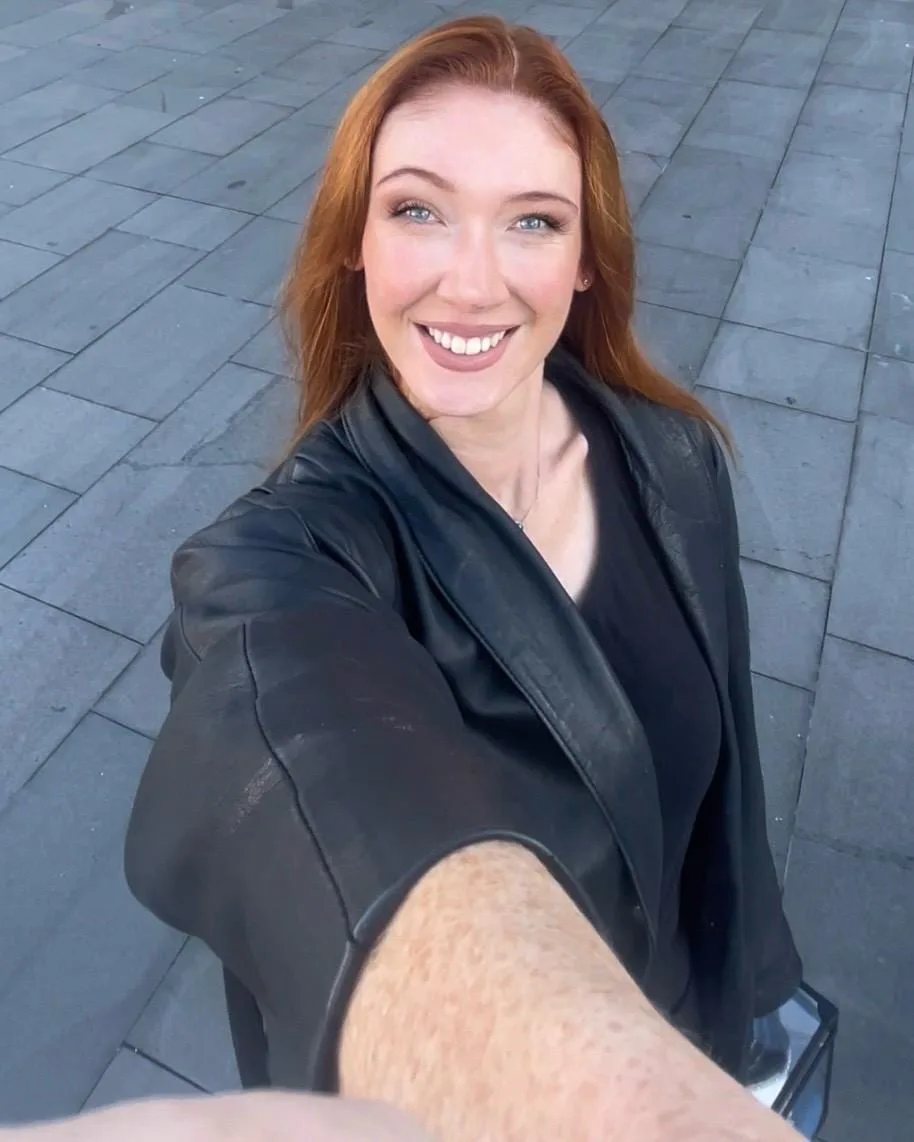
Rachel Gallagher
Rachel Gallagher is a Sydney-based fashion educator, writer, and lecturer with eight years of experience working inside the fashion industry. She founded About Your Clothes to give everyday shoppers the information they deserve, without jargon or guilt.