
Contributors
Australian Made or Printed in Australia? What Clothing Brands Actually Mean
Australian made, Australian designed, or printed in Australia? Lonely Kids Club founder Warwick Levy breaks down what clothing brands actually mean.
There is a bit of wording in Australian fashion that has always driven me mad.
You will see a huge “AUSTRALIAN” across a brand’s website, then somewhere underneath, in much smaller type, the word “designed”. Or “owned”. Or “printed”.
Those things all matter. They are also completely different things, and brands know most people are not stopping to pull the sentence apart.
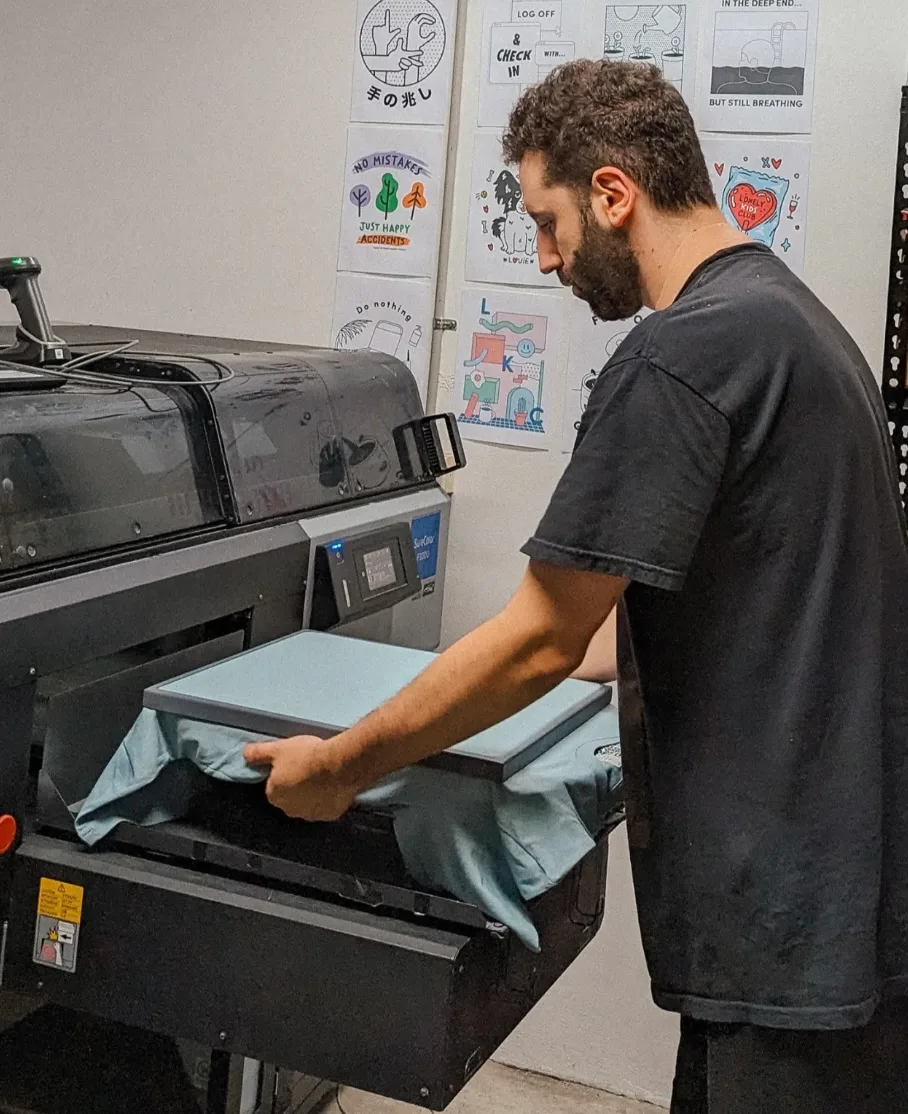
I run Lonely Kids Club, an independent clothing label I started in Sydney in 2011. Back then it was me in a flat with a heat press, printing orders at night and taking them to the post office. Fifteen years later we have a proper studio, much better printers and a small team, but the basic process has not really changed. Someone orders a shirt, then we print it.
Our blank garments are made overseas. We currently use AS Colour blanks. We do not cut and sew those garments in Sydney and I would never want somebody to think we do. Once the blanks reach us, every order is printed, finished, checked, packed and sent by our team here.
The most accurate description of our clothing is Australian designed and printed to order in Sydney on overseas made blanks. It is a bit of a mouthful. It is also true.
Australian made has an actual meaning
“Australian made” is not meant to be a general vibe. It is a country of origin claim.
The ACCC’s guidance says that “made in” generally means the last substantial step in making the product happen in that country. The processing needs to leave the finished product fundamentally different in its identity, nature or essential character from the imported components.
I am not going to pretend to be a lawyer, because I am obviously not one. The useful bit for an ordinary customer is that owning an Australian business and doing part of the work here does not automatically make the complete product Australian made.
Printing a design on a blank garment is real production work. It requires equipment, training, labour and a fairly relentless relationship with white ink. But that does not automatically mean the garment has been substantially transformed enough to call the whole thing Australian made.
That is why we say printed in Sydney. It describes the work we actually do without quietly asking the customer to imagine the rest.
Australian owned tells you who owns the company. Australian designed tells you where the creative work happened. Printed in Australia tells you where the artwork was applied. Australian made makes a larger claim about the origin of the product itself.
Once you spell it out, the difference seems pretty obvious. A lot of fashion marketing relies on nobody spelling it out.
The local part still matters
I also do not want to swing too far the other way and act as though local printing is just a decorative final touch that means nothing.
For us, it is the daily work of the business. An order comes through and somebody in our Sydney studio pulls the right blank, prepares it, loads it onto one of our printers, checks the print, cures it, packs it and sends it. Nothing is already sitting in a warehouse as a finished Lonely Kids Club shirt.
Keeping that work here means we employ people here, operate our own studio and control the quality ourselves. If a print looks wrong, it is our problem and we deal with it. There is no mystery factory or fulfilment company for us to blame.
It also lets us print to order. This was not originally some grand sustainability strategy. When I started the brand at 22, I could not afford to print hundreds of shirts and hope people bought them. I had to wait for an order, print it and use that money to keep going.
It turned out to be a useful way to avoid a very common kind of fashion waste.
We do not have to guess how many people will want a particular design, colour or size. If two people order a strange magpie shirt, we print two. If two hundred people order it, we print two hundred. There is no pile of finished stock left behind because I got overly confident about a joke.
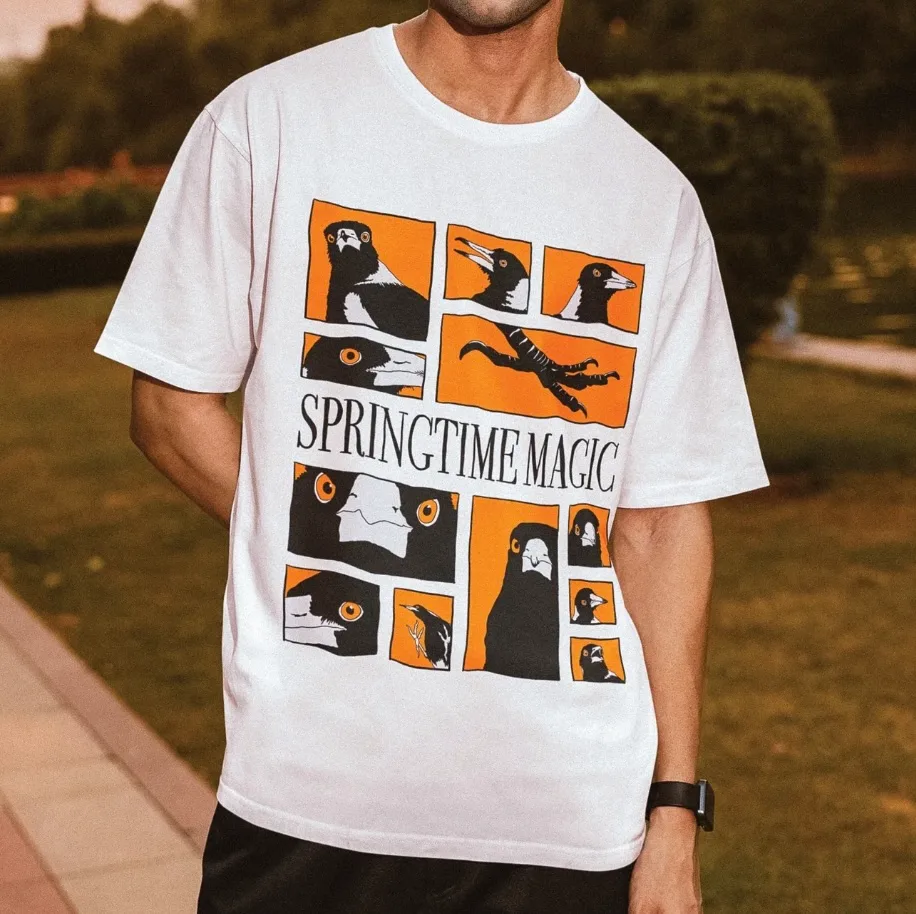
That is the main reason our clothing is printed in Sydney after it is ordered. It lets us keep niche designs available, work with smaller artists and avoid making finished clothing that nobody asked for.
That part of the process has genuine value. It still does not mean the blank garment was made here. Both facts can exist in the same paragraph without cancelling each other out.
Local is not a magic sustainability word either
Something being printed locally does not automatically make it sustainable. It just answers one question about where part of the work happened.
You still need to know what the garment is made from, who manufactured it, what standards the supplier follows, what inks are being used, how the studio is powered, how much stock is produced and what happens to the stuff that does not sell.
At LKC we use AS Colour blanks with published sourcing standards and certifications. We print with OEKO-TEX certified water based inks, run the studio on carbon neutral electricity and use home compostable mailers. Because we print after an order arrives, we do not create piles of preprinted deadstock.
Those are choices I am proud of, but they do not make the business impact free. The garments still travel before they reach us. Printing uses energy, ink and equipment. Packaging still exists, even when it is a better version of packaging.
I get wary when a sustainability page lists every positive detail so enthusiastically that you forget to ask about everything it left out. I think it is more useful for a brand to explain what each decision improves and what it does not solve.
Our production model helps us avoid overprinting. It keeps part of the supply chain local. It gives us control over inks, power, quality and packaging. It does not turn an overseas made blank into a locally sewn garment, and we should not talk as though it does.
Brands can just say what happened
Customers do not need a perfect supply chain story. They need enough real information to make their own decision.
If a brand promotes itself as Australian, it should be able to tell you where the garment was cut and sewn, where the artwork was designed, where it was printed or embroidered and whether that work happens in house or through another company.
It should not take twenty minutes of scrolling through phrases like “consciously created” and “thoughtfully crafted” to find out which country the shirt came from.
Certifications help. Local jobs matter. Better materials matter. Producing less finished stock matters. None of those things needs to be inflated into a bigger claim to have value.
Most customers understand that clothing supply chains are complicated. Cotton can be grown in one country, turned into fabric in another, sewn somewhere else and printed in Sydney. Nobody is shocked by that. What bothers people is realising that the wording on a website was carefully arranged so they would assume something the brand never quite said.
“Designed in Australia and printed to order in Sydney on overseas made blanks” is never going to look as punchy on a homepage as “Australian made”. I can live with that.
Fifteen years into running a clothing label, I would rather be slightly less impressive for a few seconds and much more believable over time. Just tell people what happened. They can decide how they feel about it from there.
About the contributor
Warwick Levy
Warwick Levy founded Lonely Kids Club in Sydney in 2011. The independent clothing label prints every order in its own Sydney studio, working with local artists and a small in-house team. Warwick remains overly familiar with T shirt printers, magpies and the many creative ways fashion brands describe where their products come from.